
Legacy in business: lessons from our September breakfast
Picture yourself twenty years from now, sitting in a favourite armchair, telling a grandchild about the difference you made. What would you want them to hear? That was the question our September breakfast speaker put to the room at Fetcham Park House, and it set the tone for a morning spent thinking hard about legacy in business, not as something reserved for the history books, but as a decision we make every single day.
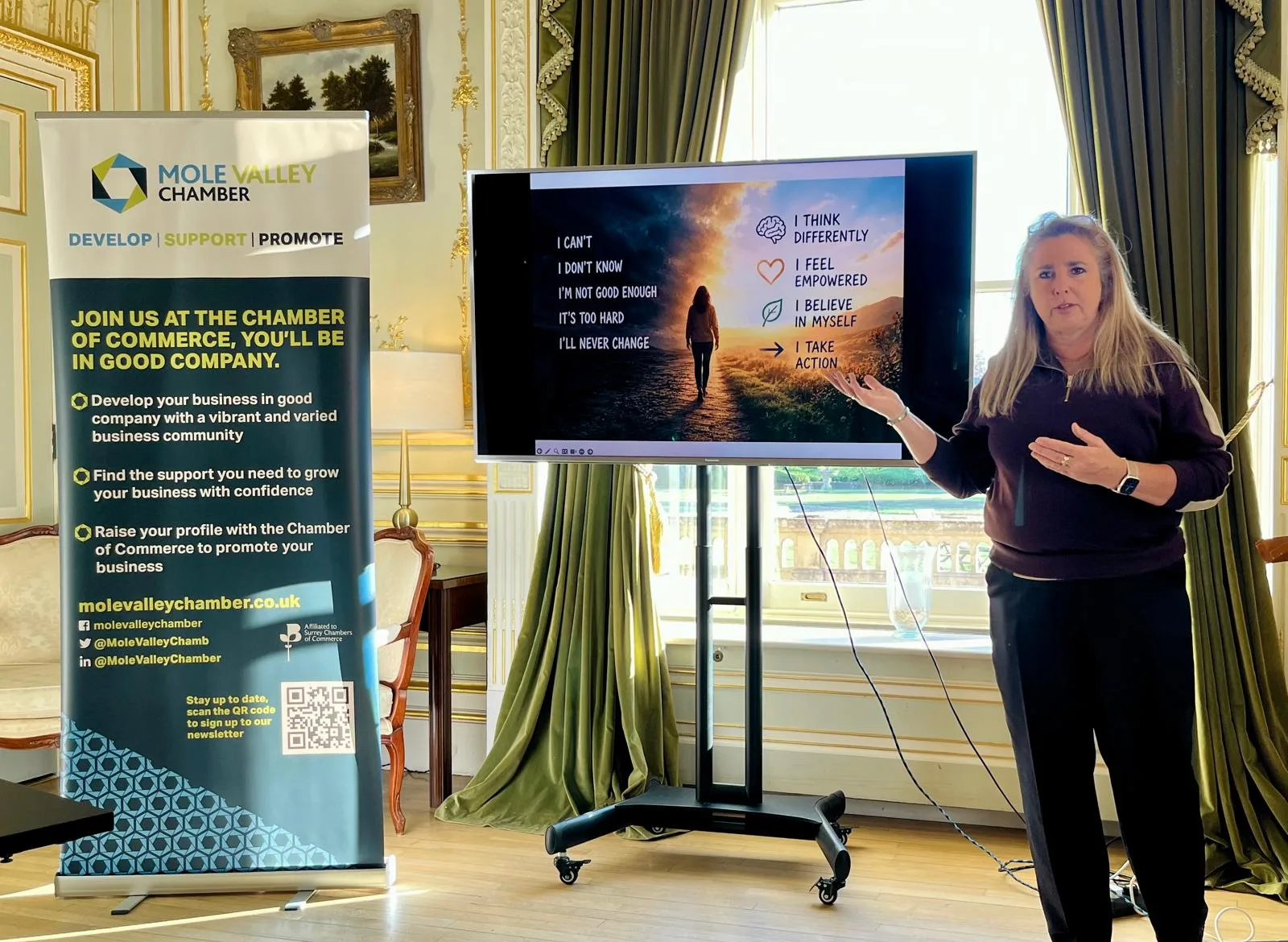
Our guest was Louise Camby of Voice Productions, a professional speaker and proud member of the Professional Speaking Association, whose talk challenged the usual assumptions Mole Valley Chamber members hold about what a legacy actually is, and when it starts.
What happened at our September breakfast
Louise opened by asking everyone in the room to close their eyes and imagine themselves decades from now, reflecting on their achievements with family. A few brave members shared what came to mind, from decades of community and charity work to feeding thousands of meals to frontline workers during lockdown. It was a strong reminder that our members are already building something worth remembering, whether they realise it or not.
Legacy thinking also shifts the focus from the bottom line to a bigger purpose, which Louise argued actually helps the bottom line too. Businesses that know what change they want to see in the world tend to attract partnerships, press attention and repeat custom more naturally than those focused purely on the next sale. The Federation of Small Businesses has written more on how brand storytelling builds this kind of customer loyalty, if you want to take the idea further.
Why legacy in business matters to local business owners
For a chamber built on relationships rather than transactions, this message landed well. Louise explained that businesses who think consciously about legacy in business become more memorable, because stories are far easier to recall than a list of services or a CV of achievements. When customers feel an emotional connection to why you do what you do, they are more likely to return, to refer you, and in some cases to pay more to stay with you.
Legacy thinking also shifts the focus from the bottom line to a bigger purpose, which Louise argued actually helps the bottom line too. Businesses that know what change they want to see in the world tend to attract partnerships, press attention and repeat custom more naturally than those focused purely on the next sale.
Legacy in business is a present day strategy, not a retirement plan
One of the clearest points of the morning was that legacy thinking is not something to leave until you wind down or sell up. Louise used the England football manager Gareth Southgate as an example: a man defined publicly by a missed penalty and two sackings, who used that low point to build a legacy supporting young men who struggle to find work. The lesson for our members was simple. Whatever setback or challenge you have overcome in your own business journey could be the very thing that shapes your legacy, starting now.
Three ways to start building your legacy today
Louise offered three practical exercises that any business owner in the room could try this week.
- Storytelling. Think about who shaped you, and what lessons you have learned that could save someone else from reinventing the wheel. These stories belong in your client conversations, your website and your social posts, not just in your head.
- Transformational thinking. Rather than simply educating clients, ask what you want people to do differently because they worked with you. That shift, from information to transformation, is what makes a business memorable.
- Succession and knowledge capture. Whether you are a sole trader or run a growing team, think about what happens to your knowledge, your relationships and your community work when you eventually step back. Capturing that now, rather than losing it when someone retires or moves on, protects everything you have built.
She also set some simple homework: ask ten to fifteen people who know you well to describe you in three words, ask your audience for feedback after you speak or present, and reread your testimonials for the common threads. Between them, these three exercises start to reveal what your legacy already looks like, whether you have noticed it or not.
A story close to home
Louise used one of our own members as a live example. Simon, well known across the chamber for his work with Rotary and his fundraising for motor neurone disease research, was named from the floor almost instantly when Louise asked the room for examples of legacy in action. It was a lovely, unplanned moment that proved her point better than any slide could. Simon has never set out to build a legacy. He has simply kept showing up for causes that matter to him, and the chamber now associates his name with that work without being asked to.
Bringing legacy thinking into your own business
Whether you run a hospitality business, a professional practice or a retail shop in Dorking or Leatherhead, the lesson from this breakfast is the same. Start noticing the legacy you are already building through your daily decisions, your client relationships and the causes you support. Then ask whether that legacy matches the twenty year vision Louise invited us to imagine at the start of the session.
Join us at the next Mole Valley Chamber breakfast to keep these conversations going, meet more of our members, and pick up more practical thinking to take back into your business. If you would like to get involved in Surrey business networking, get in touch with the chamber team, or come along as a guest to see what our breakfasts are all about.
FAQ: legacy in business
Legacy in business is the lasting impact a business or business owner has through the way they treat people, the decisions they make, and the stories they tell, not just what happens after they retire or sell up. It is built every day, not left to chance at the end of a career.
No. Legacy in business is a present day strategy rather than a retirement plan. The habits, relationships and stories you build now shape your legacy long before you step back from the business.
Storytelling makes a business more memorable, because people recall stories far more easily than a list of services or achievements. Sharing who shaped you and what you have learned helps clients connect emotionally with your business, which builds loyalty and referrals.
Reputation is what people think of you today. Legacy is what continues because of you tomorrow, built through the cumulative effect of your everyday decisions, relationships and stories.
Our breakfasts run regularly and are open to members and guests, with a different guest speaker each time. Visit our events page to see the next date and book your place.
Membership is open to businesses of every size across Dorking, Leatherhead and the wider Mole Valley area, from sole traders to established companies. Members get access to regular networking, advocacy on issues that affect local business, and a genuine community of people who want to see each other succeed. Visit our membership page to see what’s included and get started.
From breakfast talks like this one to evening networking and workshops, there is usually something in the diary. Head to our events page for the full calendar and booking links.
CHECKOUT MOLE VALLEY CHAMBER EVENTS HERE
Are you a local business in the Mole Valley District and interested in joining the chamber? Find out more here.