
Help with business debt: why the first conversation matters most
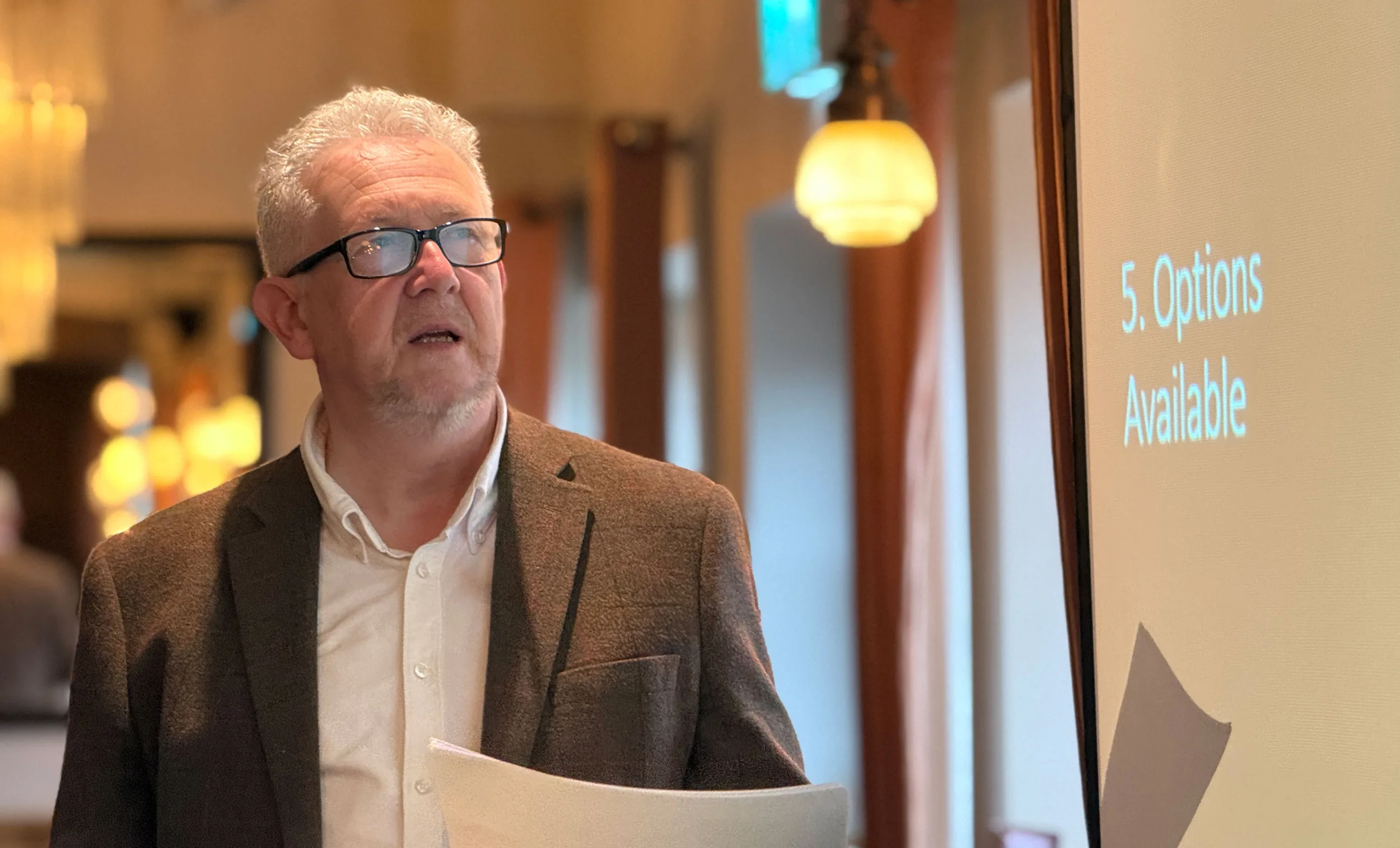
How many business owners in Mole Valley are lying awake over a debt they have not told anyone about? Probably more than any of us would guess. At this morning’s Mole Valley Chamber networking breakfast at The Watermill in Dorking, licensed insolvency practitioner Tony Bayliss of RBW Restructuring & Insolvency was clear: help with business debt and personal debt is available, it is often far less daunting than people fear, and the sooner you ask for it, the more options you have.
A talk that came from the heart
Tony has worked in insolvency since 1994 and is a director and founder member of RBW, based in its Epsom office. Most of the firm’s work is corporate insolvency, but he made a point of saying he was not there to sell. Instead, he spent his time on the subject he cares about most: people in vulnerable circumstances who are struggling with debt.
He admitted this is the part of his talk that still chokes him up. Research by the Money and Mental Health Policy Institute estimates that more than 100,000 people in problem debt attempt suicide in England each year, and that people in problem debt are three times as likely to have considered suicide. People with mental health problems are also far more likely to fall into problem debt in the first place.
“I’d rather save a life than go to a funeral,” Tony told the room. He gives around a fifth of his working time, much of it at weekends, to helping people in exactly that situation.
Why debt and mental health are so closely linked
Tony stressed that “vulnerable” does not only mean someone with a diagnosed mental health condition. Bereavement, illness, a relationship breakdown or the sudden loss of a major client can all leave someone less able to cope with money worries.
When that happens, people rarely behave the way a spreadsheet would predict. Phone calls go unanswered. Letters sit unopened on the shelf. The problem feels shameful, so it stays hidden, and it grows.
The encouraging news, he said, is that lenders and the courts are far more understanding than they were even six or seven years ago.
The breathing space scheme: time to think
The change Tony rates most highly is the government’s breathing space scheme, formally the Debt Respite Scheme, available to people who live in England or Wales. You do not need a mental health diagnosis to use it.
A standard breathing space gives up to 60 days of protection. During that time, creditors must pause most enforcement action, stop adding interest and charges, and stop contacting you about the debt. For someone receiving mental health crisis treatment, a separate mental health crisis breathing space lasts for the whole of that treatment plus a further 30 days.
You do not apply on your own. A debt adviser, such as StepChange or Citizens Advice, checks that you are eligible and applies on your behalf, so you get proper advice at the same time. For someone with a few thousand pounds of debt and a pile of demanding letters, Tony said, those 60 days can change everything.
Getting help with business debt is often simpler than you think
One of the most reassuring parts of the talk was how ordinary the first steps are. When Tony sits down with someone, often at their own kitchen table, he starts with a simple income and expenditure review: everything that comes in, everything that must go out before debt repayments, and what is left.
From there, a realistic monthly offer can be put to each creditor in writing, backed up by those figures. In Tony’s experience, around 80% of creditors accept a reasonable written offer, and a creditor who refuses a fair offer and heads straight to court is unlikely to find much sympathy there.
“It’s so simple,” he said. “But for that person, it’s not.” That is exactly why talking to someone matters.
Options when an informal agreement is not enough
Tony also ran briefly through the formal routes. A debt management plan spreads repayments over time, although creditors do not have to freeze interest. An administration order can help someone with a county court judgment and total debts of no more than £5,000. A debt relief order can write off qualifying debts of up to £50,000 for people with very few assets and little spare income. And bankruptcy, he reminded everyone, is not the end of the world: “There’s no debtors’ prison anymore.”
A licensed insolvency practitioner or free debt adviser can explain which route, if any, fits your circumstances.
For directors: closing a company is not the end of your career
Tony helps many good directors who hit hard times, often after losing a major client. His warning was simple: do not pour your personal pension savings into a struggling limited company before speaking to someone.
If a company does have to close through liquidation, that does not stop a director working in their trade again or, with the right advice, starting afresh. Acting early also protects directors and their teams. A planned process means staff can be told the truth in good time and helped to claim what they are owed through the Redundancy Payments Service.
If someone owes your business money
Plenty of people in the room are owed money themselves, and Tony did not pretend otherwise: businesses are entitled to recover what they are owed. His plea was to take the right steps first.
That means helping frontline staff recognise when a customer may be vulnerable, recording their circumstances so they do not have to repeat a painful story, signposting free debt advice and the breathing space scheme, and genuinely considering reasonable offers.
He shared two easy frameworks.
- CARE (comprehend, assess, retain, evaluate) helps you check whether a customer has really understood the conversation.
- TEXAS (thank, explain, obtain consent, ask questions, signpost) guides how to respond when someone discloses that they are struggling.
He was realistic, too. A small minority will try to abuse the system, and directors who deliberately strip assets or misuse public money are pursued through the courts. But a creditor who can show it tried to help is in a far stronger position than one who simply demanded payment.
The message to take away
Debt problems rarely shrink when ignored, and the number of options narrows with time. Yet the first conversation is almost always easier than the one playing in your head.
If anything here sounds familiar, for you, your business or someone you know, please make that call this week, whether you need help with business debt or with personal money worries. The free, confidential services below are a good place to start. Tony is also happy to talk, or to receive an introduction, through RBW Restructuring & Insolvency on 01372 711050 or at rbwr.co.uk.
Thank you to Tony for such an honest and generous talk, and to The Watermill for hosting.
Getting help with financial difficulties: your questions answered
StepChange, Citizens Advice and National Debtline all give free, impartial debt advice by phone and online. Locally, Citizens Advice Mole Valley has offices in Dorking and Leatherhead. The government-backed MoneyHelper service can also point you to free help. You should never need to pay upfront for debt advice.
Business Debtline offers free advice for self-employed people and small businesses on 0800 197 6026. If you owe tax, HMRC may agree a Time to Pay arrangement. For limited companies, a licensed insolvency practitioner can explain your options and duties as a director, and many offer a free first conversation.
It is a government scheme in England and Wales that pauses most creditor action, interest and charges for up to 60 days, or longer during mental health crisis treatment. You apply through a debt adviser such as StepChange or Citizens Advice, who will check your eligibility.
You are not alone, and there is support. Samaritans are available free, day or night, on 116 123. You can text SHOUT to 85258. In Surrey, the NHS mental health crisis line is open 24 hours on 0800 915 4644. Mind and the Mental Health and Money Advice service explain how money and mental health affect each other. Your GP can help too. If you or someone else is in immediate danger, call 999.
Almost never. Lenders expect people to get in touch, and courts look favourably on people who engage and make reasonable offers. The earlier you ask, the more options you keep. As Tony likes to say: if it is resolvable, let’s resolve it together.
CHECKOUT MOLE VALLEY CHAMBER EVENTS HERE
Are you a local business in the Mole Valley District and interested in joining the chamber? Find out more here.